
Flooring Installation in Sugar Land, TX
Free in-home consultations across Sugar Land, from refinishing original oak in First Colony to full main-floor replacements in Telfair and Riverstone.
Sugar Land splits neatly into two kinds of flooring project, and which one you have depends almost entirely on when your neighborhood was built.
Established Sugar Land means First Colony, Sugar Creek, Greatwood, and New Territory, built largely through the 1980s and 1990s. These homes usually already have solid oak somewhere in them, often two-and-a-quarter-inch strip in an entry, formal dining, or study, with carpet everywhere else and glazed builder tile in the kitchen. The work here is rarely a clean-slate install. It is refinishing what is worth saving, matching new wood to old where the floor plan opens up, and deciding honestly which of the original materials have another twenty years in them. If you are weighing that call, our guide on refinishing versus replacing hardwood is a good starting point.
Newer Sugar Land means Telfair, Riverstone, Imperial, and the Avalon and Commonwealth developments. These homes came with builder-grade carpet upstairs and in bedrooms, and a mid-range tile downstairs. The most common project we do here is replacing that builder package with something that suits the house better, typically engineered hardwood or rigid-core LVP running continuously across the main floor.
What both halves of Sugar Land share is the ground underneath. Fort Bend County sits on some of the most expansive clay in Texas, and slab-on-grade construction is effectively universal here. Slabs move seasonally, which shows up as low spots, hollow-sounding tile, and doors that stick in August but not in February. Before we install anything, we measure slab flatness and test for moisture. Long plank runs across an open Telfair or Riverstone floor plan are unforgiving of a slab nobody checked, and correcting it afterward means pulling up finished floor.
Sugar Land Neighborhoods We Work In
A sample of the Sugar Land communities we work in most often. This is not the full list, so if your neighborhood is not named here we very likely still serve it.
- First Colony
- Telfair
- Riverstone
- Greatwood
- New Territory
- Sugar Creek
- Imperial
- Avalon and Commonwealth
What to Expect on a Sugar Land Flooring Project
Every Sugar Land project opens with a free in-home consultation. We measure, check the slab, look at what is already down, and talk through how you actually use the house before recommending anything.
If you are matching existing wood. This is the single most common request in First Colony and Greatwood. We identify the species, cut, and width of your existing floor, and we are straight with you about how close a match is realistically achievable. Sometimes the honest answer is to run new flooring to a natural break point such as a doorway or a change in ceiling plane, rather than chase a blend that will always read slightly off.
If you are removing 1990s tile. Glued and mortared tile over slab is slower to remove than carpet and it is dusty work. We contain the area, run dust extraction, and plan for the fact that removal frequently reveals the slab issues the tile was hiding.
If you live in a master-planned community. Telfair, Riverstone, and Greatwood have gate access, contractor hour restrictions, and parking rules. We coordinate that with your HOA or management office in advance so crews are not turned away at the gate.
On timing: a single room is typically 1 to 2 days and a whole main floor usually runs 3 to 7 days. Refinishing existing oak adds cure time between coats, during which the floor cannot be walked on normally. Slab leveling, when needed, adds roughly a day before installation begins.
What Does Flooring Installation Cost in Sugar Land?
Most Sugar Land flooring projects run $4 to $15 per square foot installed. Rigid-core LVP, laminate, and standard-format tile sit at the lower-to-middle end, and solid hardwood, wide-plank engineered wood, and natural stone run toward the top.
The variables that actually move the number in Sugar Land:
- Refinishing versus replacing. On an established First Colony or Sugar Creek home with sound oak underneath, refinishing is usually meaningfully cheaper than replacement. See typical refinishing costs.
- Tile tear-out. Removing mortared 1990s tile is labor-intensive and generates disposal volume. Here is what removal typically costs.
- Slab leveling. Fort Bend clay makes this a real line item more often than in other parts of the metro. See floor leveling costs.
- Square footage and continuity. Running one material continuously across a large open main floor uses more material but produces a better result than breaking it up at every doorway.
For material-level numbers, see our guides to hardwood, LVP, and tile pricing. Your firm number comes after the in-home consultation.
Sugar Land Flooring FAQs
Can you match new hardwood to the existing floors in my First Colony home?
Usually we can get close, and sometimes we can get it exact. It depends on the species, the board width, and how much the existing floor has ambered with age. Older red oak in First Colony and Sugar Creek homes has typically darkened, so a fresh board of the same species will not match straight out of the box. The reliable approach is to install the new wood unfinished, then sand and finish the old and new together so they cure as one floor. Where that is not practical, we recommend breaking at a doorway or transition rather than forcing a blend that will always look slightly wrong.
Can you install over my existing 1990s tile instead of removing it?
We almost never recommend floating a new floor over old tile. It raises the finished height enough to cause problems at door swings, appliance openings, and the transition to adjacent rooms, and it permanently hides whatever the slab is doing underneath. Removing the tile costs more up front but it lets us see and correct the substrate, which in Fort Bend County matters more than most homeowners expect.
Do I need HOA approval in Telfair or Riverstone before flooring work?
Interior flooring itself is not usually subject to architectural review in Telfair, Riverstone, or Greatwood, so you generally do not need approval for the material choice. What these communities do enforce is access: gate entry for contractor vehicles, permitted working hours, and where crews and dumpsters can park. We handle that coordination with your HOA or management office before the first day of work.
Does my slab need leveling before installation?
We check every slab before quoting, and in Sugar Land it is a genuine variable rather than a formality. Fort Bend clay swells and shrinks seasonally, and slabs move with it. Minor deviation is corrected with self-leveling compound during floor prep. If we find movement significant enough to suggest a foundation issue rather than a flatness issue, we will say so plainly and recommend you have it evaluated before spending money on new flooring.
Should I refinish my existing oak or replace it?
If the existing boards are solid, structurally sound, and still have enough wear layer above the tongue, refinishing is usually the better value and preserves wood that is often better quality than what is sold today. Replacement makes more sense when there is water damage, when boards have been sanded thin by previous owners, or when you want a different width, species, or a continuous run through areas that are currently carpeted. We assess this at the consultation rather than guessing from photos.
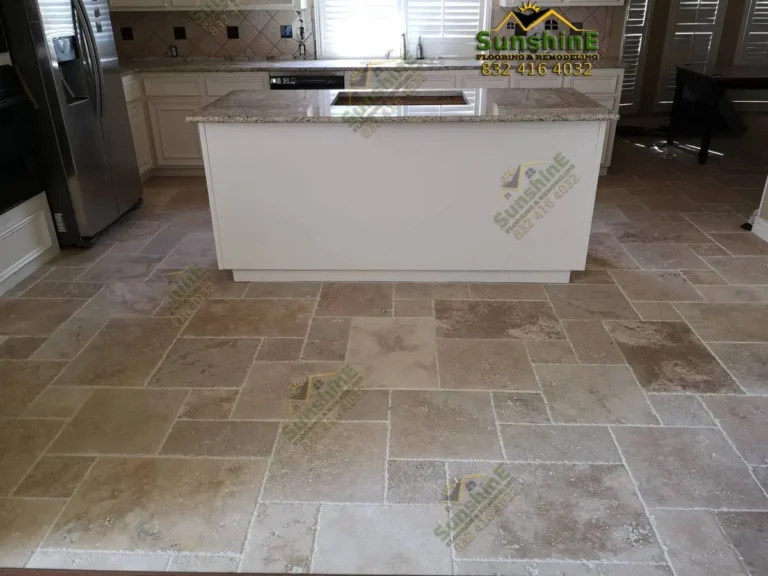
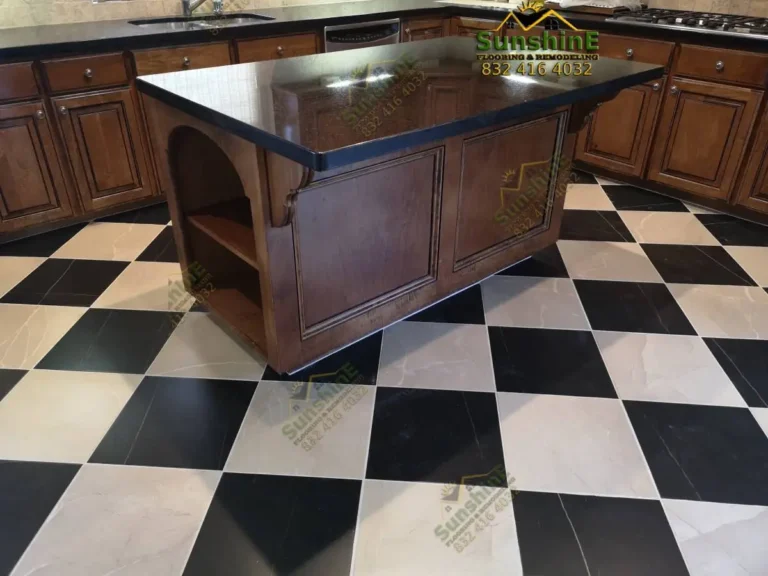
Recent Flooring Projects in Sugar Land, TX



Ready to Talk About Your Sugar Land Floors?
Whether you are restoring original oak in Sugar Creek or replacing a builder package in Riverstone, tell us what is on the floor now and what you want the house to feel like when it is finished.
Explore the details: all flooring services, hardwood, engineered hardwood, luxury vinyl plank, tile, and stairs. Or read the full flooring installation guide.
Also planning a Sugar Land kitchen or bathroom project? See our Kitchen Remodeling in Sugar Land, TX and Bathroom Remodeling in Sugar Land, TX services.
Replacing floors after a leak or flood? See our water damage restoration services in Sugar Land.
Updating more than one room? See our whole-home remodeling services in Sugar Land.