
Tile is a durable, water-resistant flooring option well suited to Houston’s climate, and Sunshine Flooring & Remodeling installs porcelain, ceramic, and select natural stone tile with attention to proper substrate preparation — the step that determines whether a tile floor stays crack-free over time.
Porcelain vs. Ceramic vs. Stone
Porcelain tile is denser and less porous, which generally makes it a strong choice for high-traffic or wet areas. Ceramic tile is often more budget-friendly and works well in many residential applications. Natural stone offers a distinct look but typically requires more maintenance, sealing in particular, than porcelain or ceramic. We’ll talk through which fits your space, budget, and maintenance preferences.
Substrate Condition and Crack Issues
Tile is rigid and unforgiving of a substrate that moves or flexes — cracks in a concrete slab or an unsupported subfloor can transfer up through tile and grout over time. Before installation, we evaluate the substrate for cracks, flatness, and structural soundness, and address issues, including crack isolation membranes where appropriate, before tile goes down.
Flatness and Large-Format Tile
Larger-format tiles have become popular for their clean, minimal-grout-line look, but they’re also less forgiving of an uneven substrate — lippage, or uneven tile edges, is more noticeable with large-format tile than with smaller tile. We check flatness against tile-industry tolerances and level as needed before installation. Floor leveling and subfloor preparation are addressed as part of that process.
Layout Planning
Before setting tile, we plan the layout to center the pattern appropriately in the room, minimize awkward cut pieces at walls, and keep grout lines consistent — details that affect how finished the floor looks once it’s done.
Grout Selection
Grout type and color affect both appearance and maintenance — we’ll discuss options, including where a stain-resistant or more flexible grout formulation makes sense for your space.
Wet and High-Traffic Areas
Tile is a common choice for bathrooms, entries, kitchens, and mudrooms because of its water resistance and durability. Proper waterproofing and membrane details matter most in wet areas like showers and bathroom floors — we’ll make sure those details are handled correctly for the space.
Removal and Prep
If you have existing flooring to remove — old tile, vinyl, or carpet — that comes out first, along with evaluation of what condition the substrate underneath is in before we move forward with new tile.
What Affects the Cost of Tile Installation
Cost depends on tile type and size, layout complexity, how much substrate prep or leveling is needed, demo and removal of existing flooring, and grout and finish details. We provide project-specific quotes after assessing your space rather than a flat rate, since substrate condition varies significantly.
Frequently Asked Questions
Can tile go directly over a concrete slab?
Often yes, provided the slab is sound, reasonably flat, and free of active cracking — we evaluate this before recommending an installation approach.
Do I need a crack isolation membrane?
It depends on the substrate’s condition. We’ll assess your slab or subfloor and recommend a membrane if the situation calls for one.
How long does tile installation take?
It depends on square footage, layout complexity, and how much prep is needed, plus grout cure time before the floor can be used. We’ll give you a project-specific timeline.
Examples of Our Tile Flooring Work
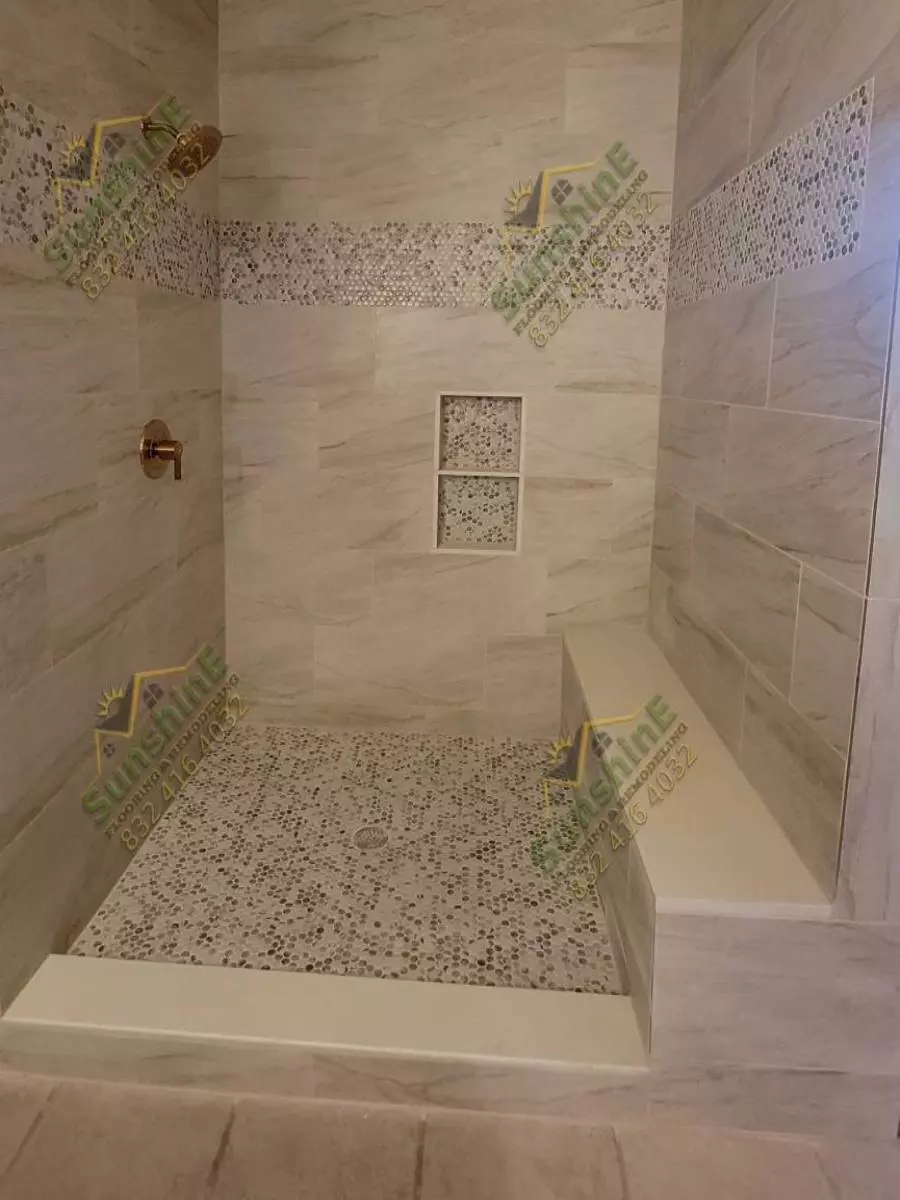
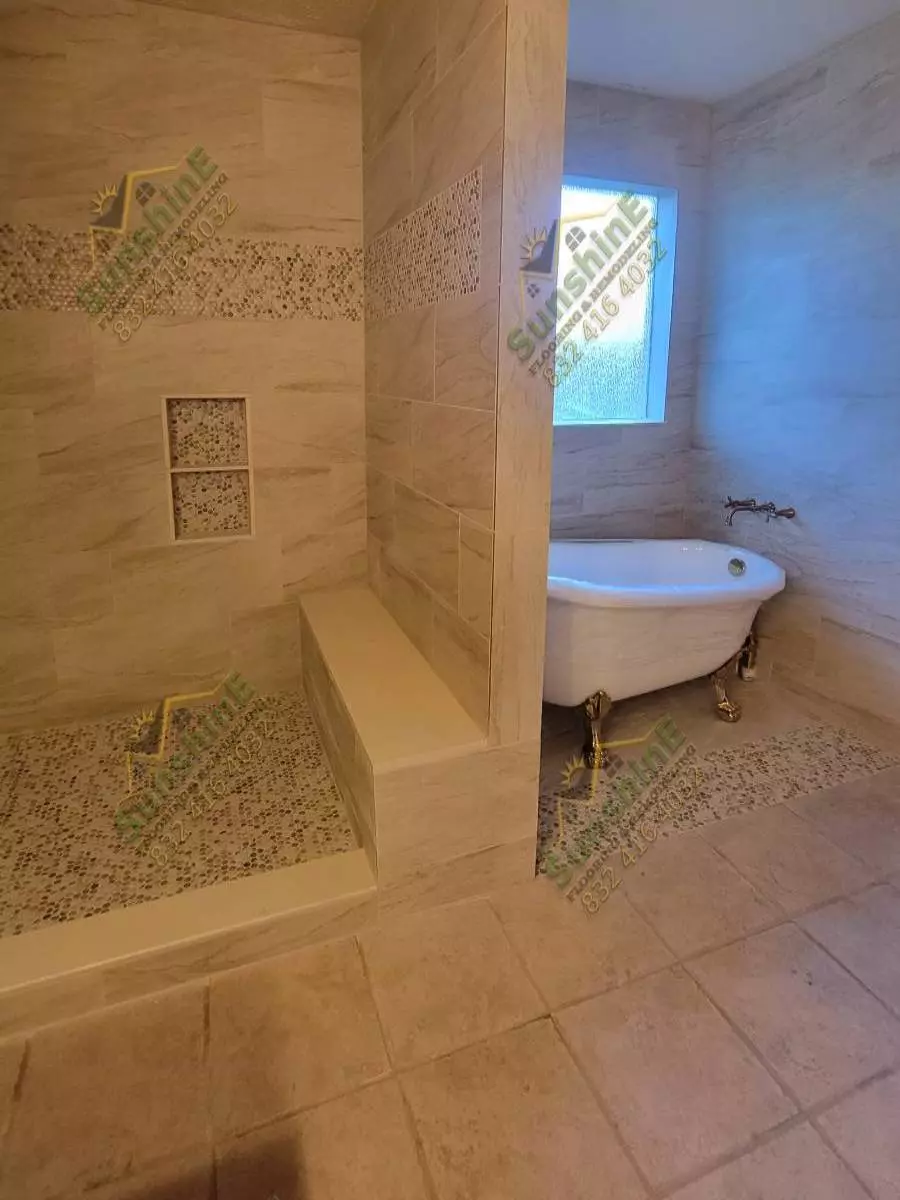
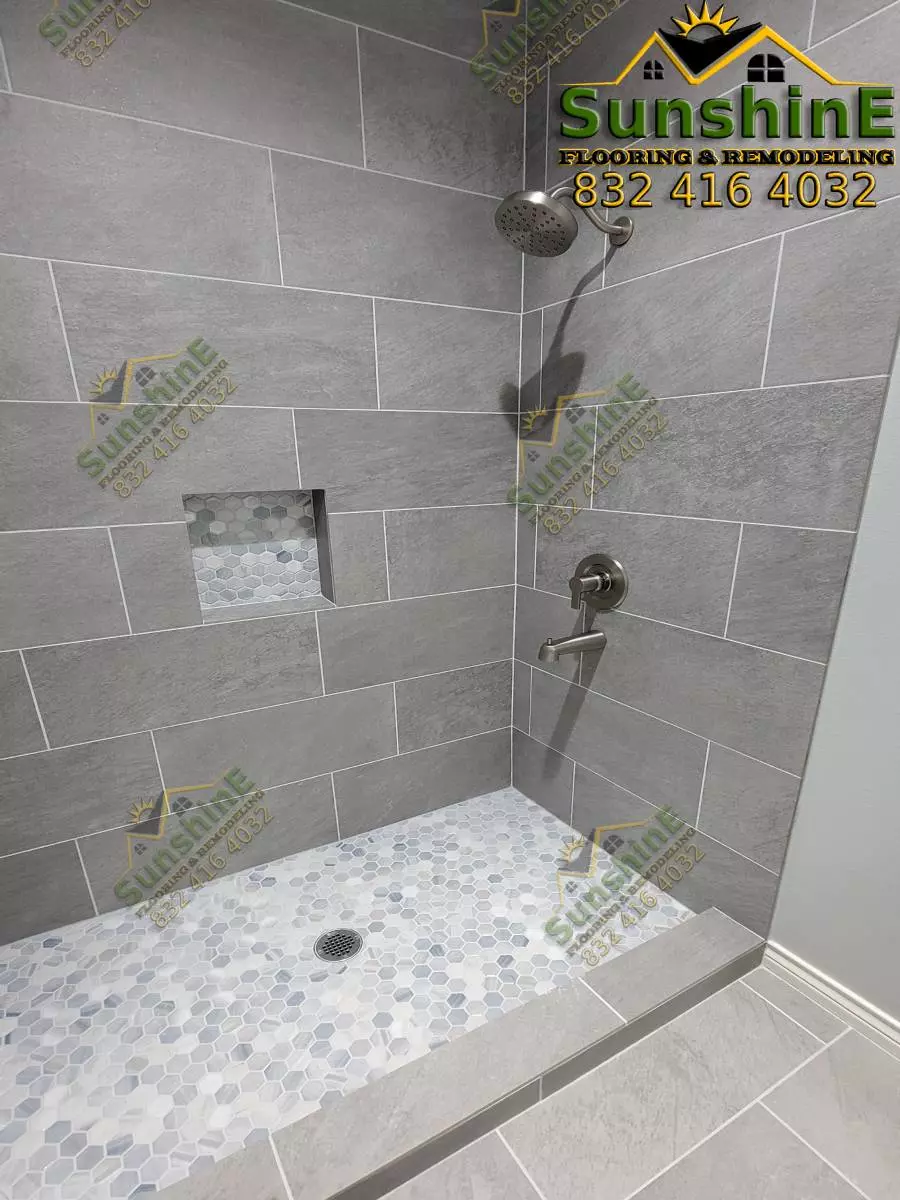
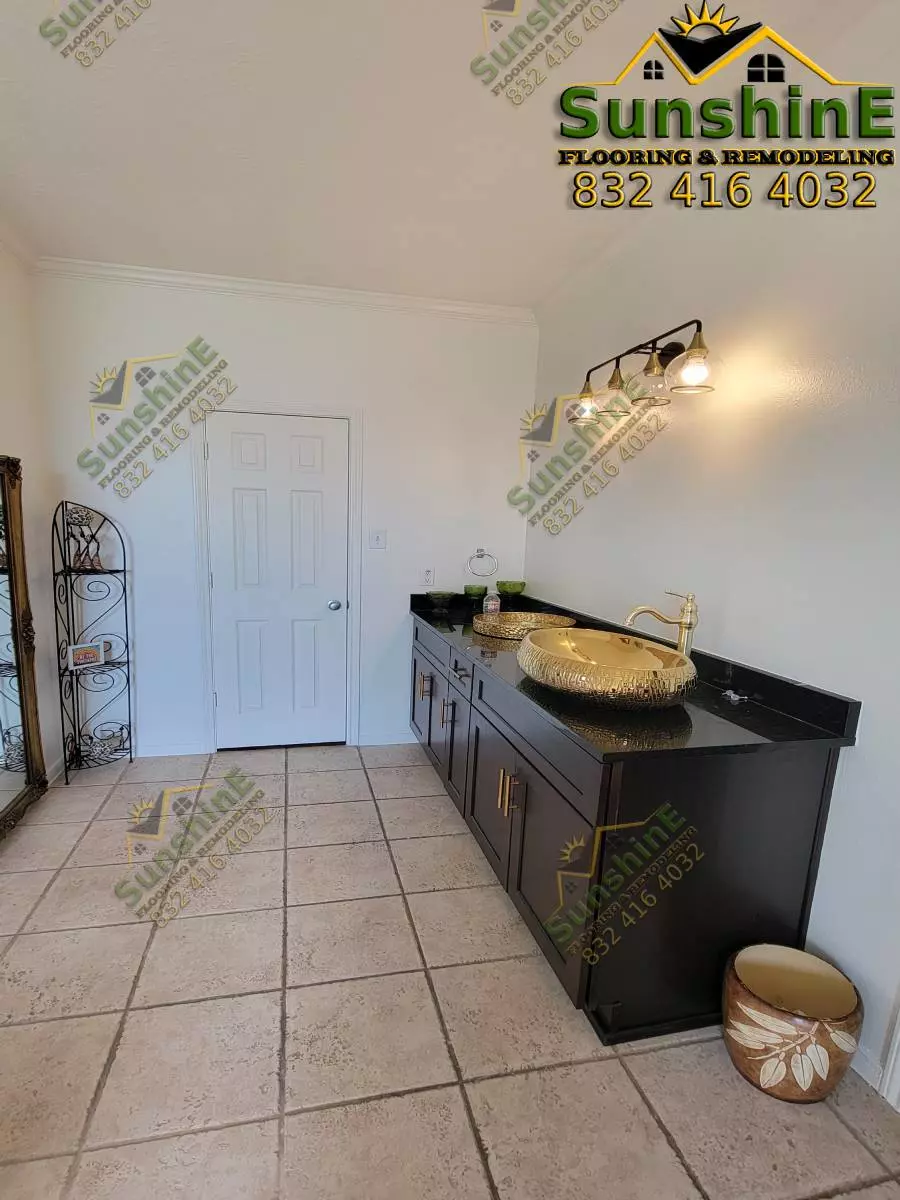
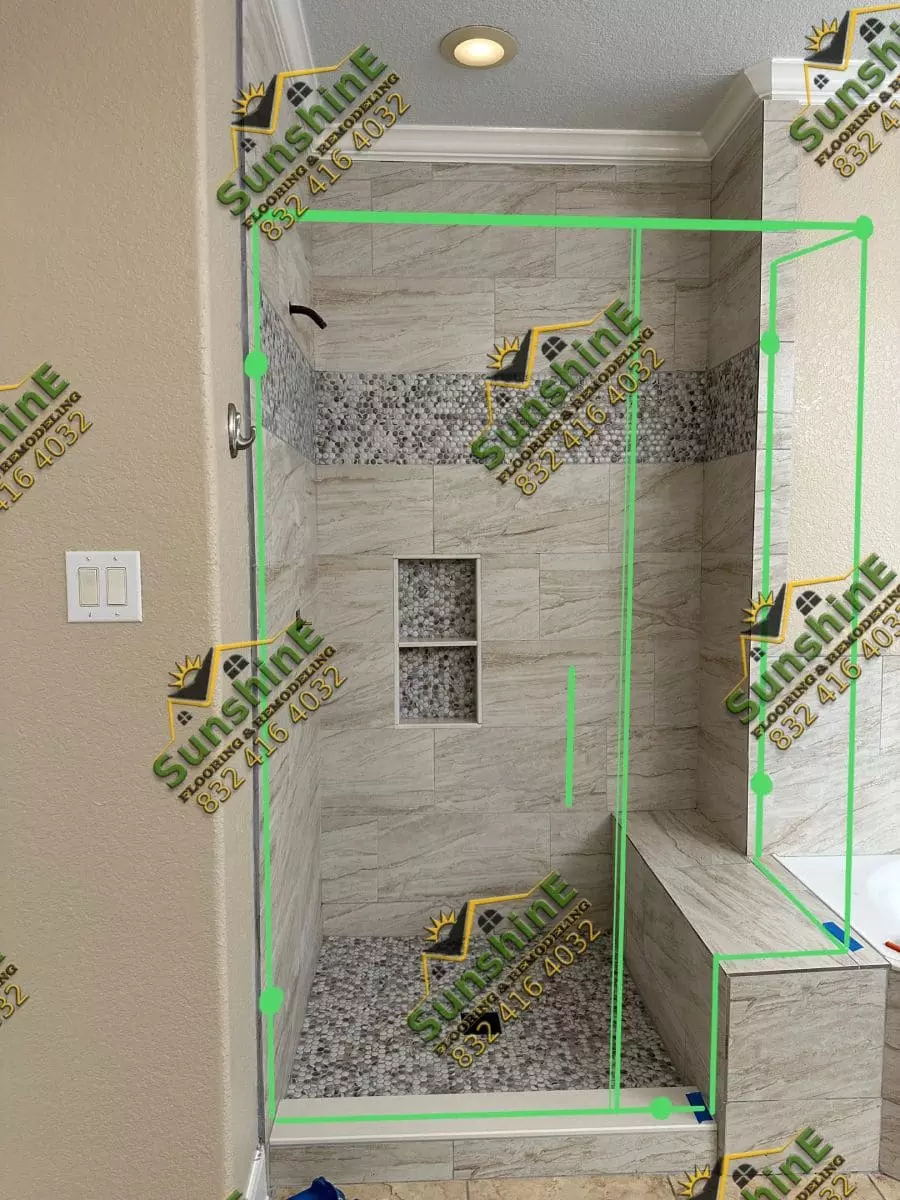
A sample of tile flooring and tile shower installations from completed Sunshine Flooring & Remodeling projects.

Flooring Installation Near You
Ready to Talk About Tile Flooring?
Contact Sunshine Flooring & Remodeling to discuss tile options for your space. See our tile flooring cost guide for pricing factors, or return to our flooring services overview.